Lyophilization Process Simulation for Pharmaceutical Manufacturing
Objective
Freeze drying is one of the most energy intensive and time critical unit operations in pharmaceutical manufacturing. Process conditions must be carefully balanced to reduce cycle times while ensuring that product temperatures remain below critical thresholds to avoid collapse or degradation.
The objective of this case study was to demonstrate how physics based simulation can be used to better understand and optimize freeze drying processes before performing costly experimental campaigns.
Approach
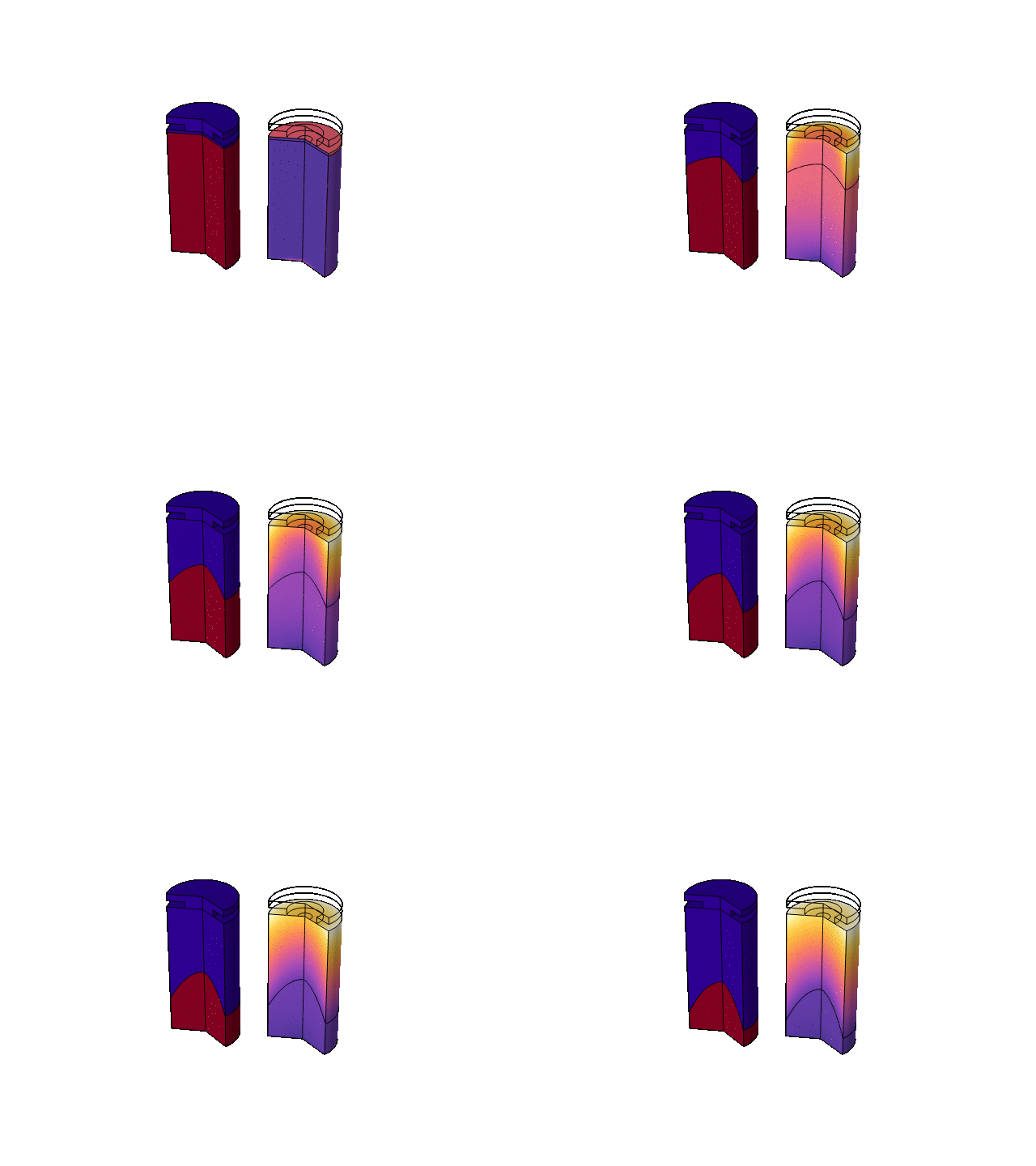
A simplified lyophilization setup of a pharmaceutical vial was modeled in COMSOL Multiphysics. The simulation focused on the primary drying phase, where ice sublimates under low pressure conditions.
The model captures:
- heat transfer within the vial
- evolution of the sublimation front
- moving boundary behavior during drying
- spatial effects caused by asymmetric heating
- local temperature distributions inside the product
The simulation also reproduces the characteristic concave sublimation front resulting from faster drying near the vial wall due to increased local heat transfer.
For visualization purposes, the vial head geometry was included separately and does not influence the underlying physics.
Business Relevance
In industrial freeze drying, even small process adjustments can significantly impact:
- drying time
- batch throughput
- energy consumption
- product quality
- process robustness
Traditionally, identifying optimal operating conditions requires extensive experimental iteration.
Simulation enables teams to evaluate process behavior virtually and explore trade offs such as:
- faster drying versus product stability
- heat transfer limitations versus mass transfer limitations
- shelf temperature optimization
- scale up sensitivity
This reduces development effort and helps de risk process changes before implementation.
Outcome
The simulation demonstrates how virtual process modeling can provide actionable insight into critical process dynamics that are difficult to measure experimentally.
By combining engineering simulation with process understanding, pharmaceutical teams can:
- shorten development timelines
- reduce experimental overhead
- improve process understanding
- support scale up activities
- make more informed process decisions
How Panejo Supports Pharma and Biotech Teams
At Panejo, we develop simulation driven workflows for pharmaceutical and biotech applications ranging from microfluidics to freeze drying and process engineering.
Our goal is to help teams accelerate development, reduce technical uncertainty, and translate complex physical processes into measurable business impact.